You've seen the ads. The guy on a beach with a laptop, the promises of financial freedom in just months, the screenshots of soaring profit charts. The message is clear: trading is easy, and anyone can do it. I traded for over a decade, managed funds, and now I coach people. My answer to the question "Is trading easy?" is a definitive no. It's one of the hardest ways to make an easy living, and the gap between perception and reality is where most beginners lose their money. This isn't meant to discourage you, but to arm you with the truth so you can decide if this path is for you, and if so, how to walk it without falling into the most common traps.
What's Inside?
The Siren Song of Simplicity: Why It Looks Easy
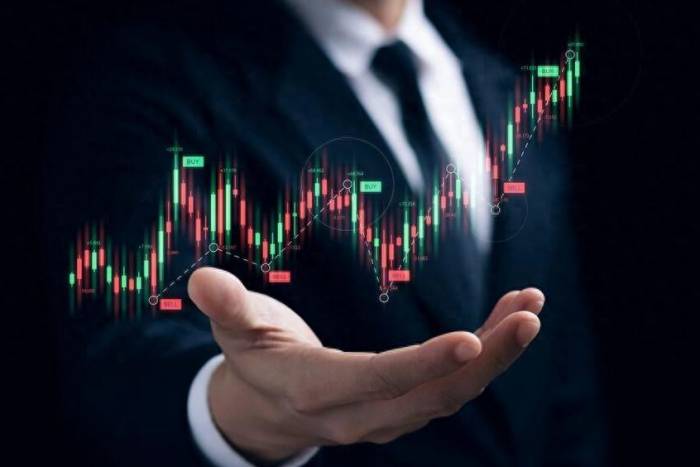
The illusion is crafted by a multi-billion dollar industry. Social media "gurus," brokerage marketing, and course sellers have a vested interest in making trading seem accessible. They highlight the mechanics—click buy, click sell—and gloss over everything in between. I call this the "UI/UX Deception." Modern trading platforms are marvels of design; clean charts, one-click orders, slick mobile apps. They make the action of trading feel as simple as ordering food online. This creates a dangerous cognitive shortcut: if the interface is simple, the activity must be simple too.
Then there's hindsight bias. Looking at a historical chart, the moves seem obvious. "Of course I would have bought there and sold there!" you think. This is a trick your brain plays. In real-time, that chart was a mess of uncertainty, conflicting news, and emotional noise. The clarity you see now never existed then. A study often cited by behavioral economists shows that people consistently overestimate their ability to have predicted past events correctly, a feeling that translates directly into overconfidence in trading.
The Three Pillars of Difficulty in Real Trading
Forget charts for a moment. Lasting success rests on three brutally difficult pillars: psychology, strategy, and risk management. Most beginners pour 90% of their energy into finding the "perfect strategy" and ignore the other two. That's a recipe for blowing up an account.
1. The Psychological Gauntlet (This is 80% of the Game)
You are your own worst enemy. I've seen brilliant analysts fail and average ones succeed, solely due to psychology. This isn't about being "smart." It's about managing instinct.
Fear and Greed: This is the classic duo. Fear makes you close a winning trade too early. Greed makes you hold a losing trade, hoping it will turn around. The real killer, though, is a less-discussed emotion: the need to be right. You attach your ego to a trade. Admitting it's wrong feels like a personal failure, so you avoid the sell button, watching the loss grow. I've done it. It's humiliating and expensive.
Discipline vs. Emotion: Your strategy will give you rules. "Sell if the price drops below this line." In the moment, with real money on the line, your brain will invent brilliant reasons to break that rule. "It's just a fake-out," "The fundamentals are still good," "Let's just wait for the next candle." Following a plan when it's emotionally painful is the core skill. It feels nothing like the exciting, intuitive process shown in ads.
2. Strategy & The Market's Job
The market's primary function is to transfer wealth from the impatient, emotional many to the patient, disciplined few. Your strategy is your process for not being part of the "many." The difficulty here is twofold: finding an edge and accepting losses.
An "edge" is a slight statistical advantage. Maybe your analysis gives you a 55% chance of being right on a trade. That's huge. But it means you'll be wrong 45% of the time. Can you execute that trade 100 times in a row, taking 45 losses, without doubting the system or tweaking it after three consecutive losers? Most can't. They jump from strategy to strategy, always chasing the one that "never loses," which doesn't exist. The Financial Industry Regulatory Authority (FINRA) repeatedly warns investors about the risks of chasing performance and switching strategies rapidly.
3. The Math of Risk Management
This is the boring, unsexy part that keeps you in the game. Let's get specific. A rule like "risk only 1% of your capital per trade" sounds simple. Let's say you have a $10,000 account. That's $100 risk per trade.
Where beginners fail is in execution. They decide to risk $100. They buy a stock at $50. Their stop-loss (the price at which they'll admit defeat) is at $45. That's a $5 drop per share. How many shares can they buy? $100 / $5 = 20 shares. 20 shares x $50 = a $1,000 position. That's correct.
The mistake? They see the $1,000 position and get scared. "That's too big!" So they buy only 10 shares. Now their risk is only $50 (10 shares x $5). But psychologically, they still feel they are "risking" the trade. If it wins, the profit is small. If it loses, it doesn't hurt enough to teach discipline. They've broken their own risk framework, making their results random and unmanageable. Proper position sizing feels uncomfortably large when you start. That's how you know you're doing it right.
How to Start Trading: A Realistic Beginner's Roadmap
If you're still reading, you're serious. Here's a step-by-step path that avoids the hype. Think of this as paying your dues.
Phase 1: Education & Paper Trading (Months 1-3)
Don't put a single real dollar in yet. Open a paper trading account (thinkorswim from TD Ameritrade or Webull's paper trading are good). Your goal isn't to make fake money. It's to build a habit.
- Learn one asset class (e.g., Forex, large-cap stocks, ETFs). Master its basics—what moves it, trading hours, contract sizes.
- Pick ONE simple strategy. A moving average crossover, support/resistance. Something with clear rules.
- Document every single trade in a journal: entry reason, exit reason, chart screenshot, your emotional state. This journal is your most valuable tool.
Phase 2: The Live Micro-Account Test (Months 4-6)
Fund an account with money you are 100% prepared to lose. I'm talking $500, maybe $1000. The amount should be meaningful enough to feel, but not life-changing if it's gone. Your goal here shifts: it's to execute your plan under real emotional pressure. The profit/loss is irrelevant. Can you follow your rules when a real $50 is moving? This phase filters out 70% of people. The psychology is entirely different from paper trading.
Phase 3: Scaling & Refinement (Month 6+)
Only after consistently following your plan for months in the micro-account should you consider adding capital. Scaling doesn't mean 10x your position size. It means maybe doubling your risk per trade from 0.5% to 1% of your now-larger capital. The process remains the same.
Trading Myths vs. Reality: A Side-by-Side Look
Let's crystallize the differences between the marketed fantasy and the gritty truth.
| The Myth (What You're Sold) | The Reality (What You Live) |
|---|---|
| It's about finding the secret indicator. | It's about consistency in execution. A simple strategy followed perfectly beats a complex one followed poorly. |
| You need to watch the markets all day. | You need to plan all day and act for minutes. Most pros spend hours analyzing, planning trades, and managing risk. The actual trading time is brief. |
| More trades = more chances to win. | More trades = more transaction costs & more chances to make emotional mistakes. Quality of setup trumps quantity. The U.S. Securities and Exchange Commission (SEC) investor alerts often warn about the costs of overtrading. |
| Profits should be consistent and linear. | Profits come in clusters, losses in streaks. You will have flat months and losing weeks. Can you stick to the plan during a 6-week drawdown? |
| The goal is to be right on every trade. | The goal is to be profitable over a series of trades. Being wrong is a built-in, acceptable part of the process if your risk management is sound. |
Your Trading Questions, Honestly Answered
I've heard stories of people turning $1,000 into $100,000 in a year. Is that even possible?
Mathematically, it's possible. Practically, it's a disaster in the making. To achieve that return (10,000%), you'd have to take astronomical risks—leveraging to the hilt, risking huge percentages of your account on single trades. One loss would wipe you out. The people who post these stories are either lying, got astronomically lucky (and will likely give it all back), or are the 0.001% outlier. Basing your expectations on outliers is the fastest way to lose money. Sustainable annual returns for even top professional traders are more often in the 10-30% range, with significant effort and risk.
How much money do I really need to start trading?
This depends on your goals and the market. If you want to day trade stocks in the U.S., pattern day trader rules require a minimum of $25,000 in your account. For swing trading or other asset classes like Forex, you can start with less. But here's the real answer: you need enough so that proper position sizing (like risking 1%) results in a position size that's actually tradable. With a $500 account, risking $5 per trade, the math often forces you into overly risky position sizes or penny stocks. A more practical minimum for meaningful learning, outside of day trading stocks, is $2,000-$5,000. And again, you must be prepared to lose it all as tuition.
What's the one mistake you see beginners make that's almost never talked about?
They trade to feel something. Boredom trading. After hours of analysis with no clear signal, they take a mediocre trade just to "be in the game." They confuse activity with progress. The market doesn't owe you action. The most powerful skill is the ability to sit on your hands, to watch a beautiful setup develop and then pass because one key rule isn't met. The best trade you make all week might be the one you don't take. This discipline of inaction is rarely shown in any promotional material because it's not exciting.
Can I rely on AI or automated trading bots to do the work for me?
Be deeply skeptical. If someone has a bot that prints money reliably, they are not selling it for $99 a month. They'd use it themselves or lease it to hedge funds for millions. Many bots are curve-fitted—they work perfectly on past data but fail in live markets. Others are outright scams. Even legitimate algorithmic trading requires immense oversight, constant adjustment, and an understanding of the underlying strategy. It's not a set-and-forget solution. The SEC maintains an entire section on its website devoted to investor alerts about frauds involving automated trading systems.
So, is trading easy? Absolutely not. It's a demanding profession that requires you to fight your own nature every single day. The simplicity is a facade. The real work is internal, tedious, and unglamorous. But if you approach it with respect, with a focus on process over profits, and with the patience to learn through inevitable losses, it can be a viable skill. Ditch the dream of easy money. Embrace the challenge of disciplined execution. That's the only path that doesn't end with an empty account and a lesson learned the hard way.